Dataset
Plot of molar ellipticity at 222 nm versus concentration of free La3+ for LanM D3ED9E bound to lanthanum, used to calculate the LanM D3ED9E-La3+ binding affinity (Kd).
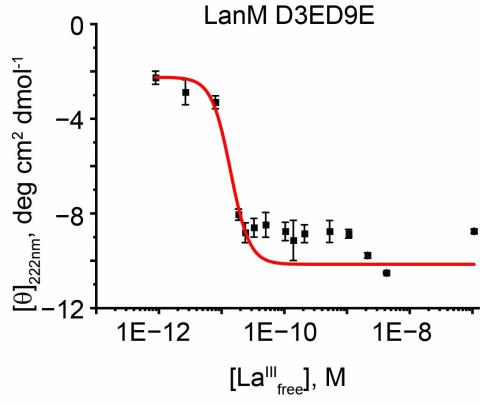

Plot of molar ellipticity at 222 nm versus concentration of free La3+ for LanM D3ED9E bound to lanthanum, used to calculate the LanM D3ED9E-La3+ binding affinity (Kd).
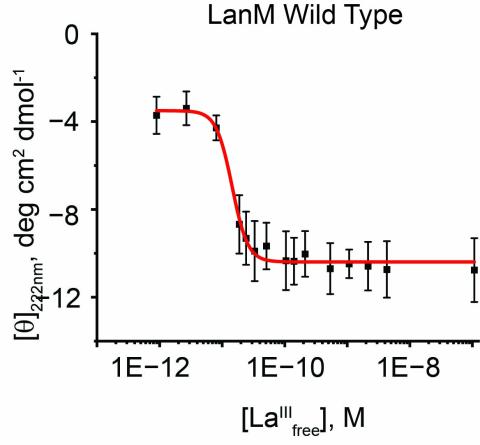
Plot of molar ellipticity at 222 nm versus concentration of free La3+ for LanM WT bound to lanthanum, used to calculate the LanM WT-La3+ binding affinity (Kd).
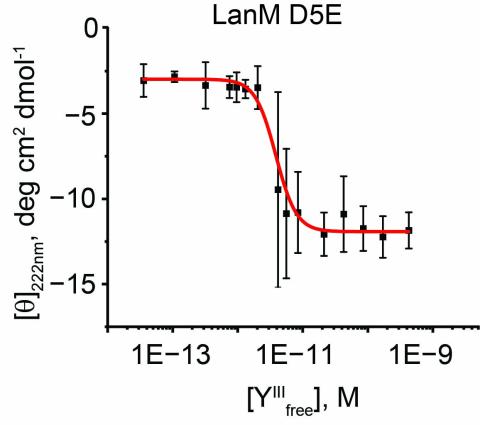
Plot of molar ellipticity at 222 nm versus concentration of free Y3+ for LanM D5E bound to yttrium, used to calculate the LanM D5E-Y3+ binding affinity (Kd).
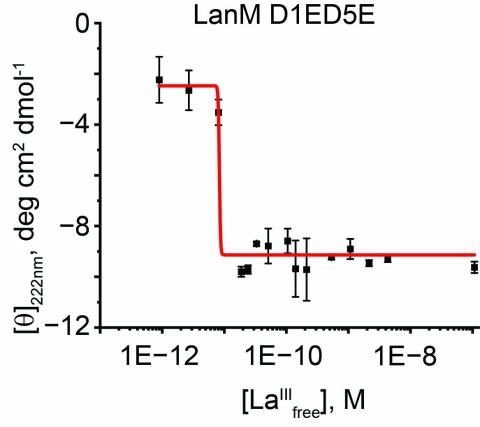
Plot of molar ellipticity at 222 nm versus concentration of free La3+ for LanM D1ED5E bound to lanthanum, used to calculate the LanM D1ED5E-La3+ binding affinity (Kd).
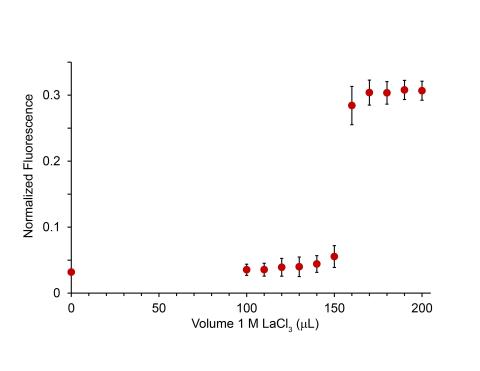
Raw UV/Vis data measuring XO fluorescence as a function of increased [La3+]
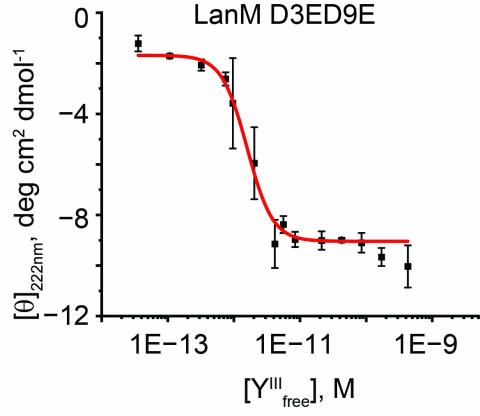
Plot of molar ellipticity at 222 nm versus concentration of free Y3+ for LanM D3ED9E bound to yttrium, used to calculate the LanM D3ED9E-Y3+ binding affinity (Kd).
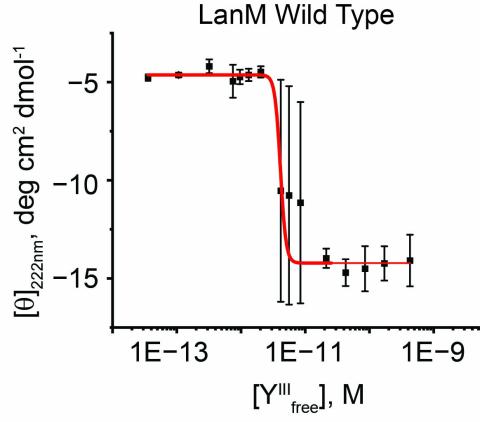
Plot of molar ellipticity at 222 nm versus concentration of free Y3+ for LanM WT bound to yttrium, used to calculate the LanM WT-Y3+ binding affinity (Kd).
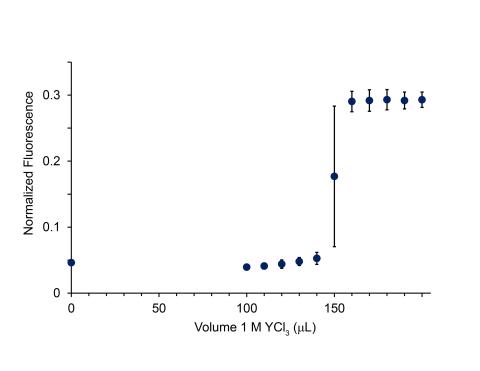
Raw UV/Vis data measuring XO fluorescence as a function of increased [La3+]
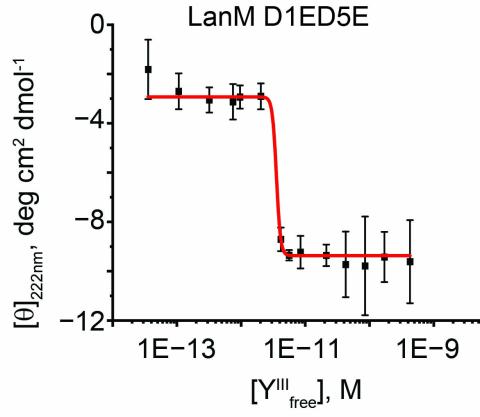
Plot of molar ellipticity at 222 nm versus concentration of free Y3+ for LanM D1ED5E bound to yttrium, used to calculate the LanM D1ED5E-Y3+ binding affinity (Kd).
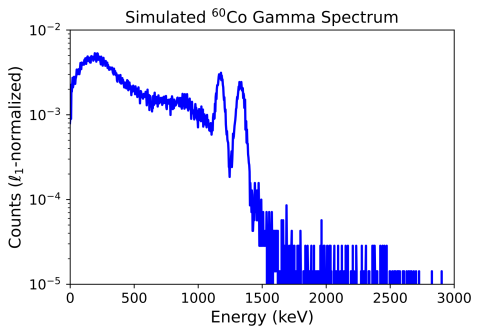
This dataset contains GADRAS and Geant4 simulated gamma-ray energy spectra used in the papers "Sim-to-real supervised domain adaptation for radioisotope identification" (https://doi.org/10.1016/j.nima.2025.171159) and "Unsupervised domain adaptation for radioisotope identification in gamma...
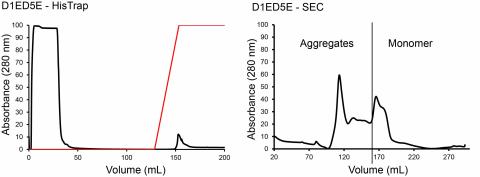
Raw chromatographs for the HisTrap and SEC columns run to purify LanM D1ED5E.
Rare earth elements (REEs) are essential to modern technologies, yet their high physical and chemical similarity makes separation of individual REEs difficult and environmentally taxing. Metalloproteins offer a promising alternative for selective REE binding, as they tend to have high metal ion...
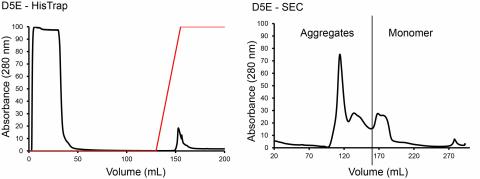
Raw chromatographs for the HisTrap and SEC columns run to purify LanM D5E.
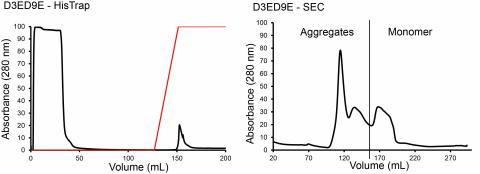
Raw chromatographs for the HisTrap and SEC columns run to purify LanM D3ED9E.
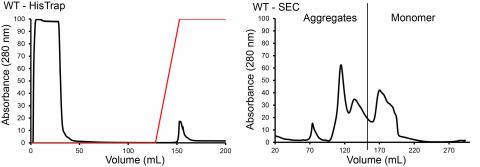
Raw chromatographs for the HisTrap and SEC columns run to purify LanM WT.