
Category
Description
Data Description
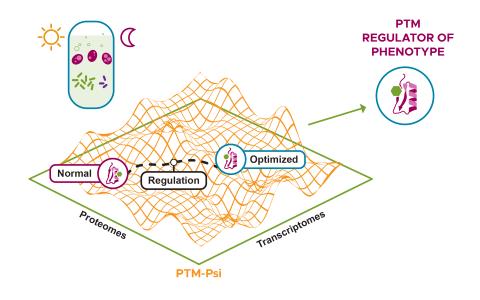
Co-cultured S. elongatus PCC 7942 CscB/SPS and R. toruloides IFO0880 presented as an effective photosynthesis-driven biofuel production platform. The goal of this experiment was to understand the molecular mechanism of this co-culture system at redox post-translational modification level. The redox proteome of the co-cultured strains was compared to a mono-cultured S. elongatus in light or dark conditions. Samples were processed using a resin-assisted capture (RAC) workflow with TMT labeling to enrich and quantify modified cysteines at proteome level. The datasets were generated by a Q Exactive Plus Orbitrap Mass Spectrometer coupled with a Waters nanoAcquity UPLC, then searched by MSGF+ for downstream redox PTM analysis.
Data Download Reference Citation
Cheung, Margaret; Xiaolu Li, Tong Zhang, Pavlo Bohutskyi and Katrina Waters. (2025) Microbial Co-Culture Control Proteomics (MC-DP1). https://doi.org/10.25584/3013017
Accessible Digital Data Downloads
The repository contains the following folders and files:
- MC_DP1_SampleMetadata.xlsx: Contains sample metadata information including descriptors, experimental conditions, cell lines (if applicable)
- MC_DP1_Monoculture_Syn Protein Data.xlsx: Normalized abundance and statistics for a monoculture of S. elongatus using both global and redox proteomics
- MC_DP1_Coculture_Syn_Rhodo protein data.xlsx: Normalized abundances and statistics for a co-culture of S. elongatus and R. toruloides using both global and redox proteomics. In the data, "Se" stands for "S. elongatus" and "Rt" for "R. toruloides".
Total Download Size: 6.5 MB, zipped
Linked Primary Data
Primary liquid chromatography-mass spectrometry (LC-MS) raw measurement data are openly accessible for download at the Mass Spectrometry Interactive Virtual Environment (MassIVE) community repository under the accession MSV000099883.
Funding Acknowledgments
The research data described here was funded in whole or in part by the Predictive Phenomics Initiative (PPI) at Pacific Northwest National Laboratory (PNNL). This work was conducted under the Laboratory Directed Research and Development Program at PNNL. A portion of this research was performed in the Environmental Molecular Sciences Laboratory, a national scientific user facility sponsored by the U.S. Department of Energy (DOE) Office of Science located at PNNL. PNNL is a multiprogram national laboratory operated by Battelle for the DOE under Contract No. DE-AC05-76RL01830.
Citation Policy
In efforts to enable discovery, reproducibility, and reuse of PPI-funded project dataset citations in accordance with best practices (as outlined by the FORCE11 Data Citation Principles), we ask that all reuse of project data and metadata download materials acknowledge all primary and secondary dataset citations and corresponding journal articles where applicable.
Data Licensing
Projects (2)
People (3)