Biogeochemical models for predicting carbon dynamics increasingly include microbial processes, reflecting the importance of microorganisms in regulating the movement of carbon between soils and the atmosphere. Soil viruses can redirect carbon among various chemical pools, indicating a need for...
Showing 1006 - 1020 of 21184
Primary publication pre-print. Cite as: arXiv:2410.09346 [q-bio.MN]
Category
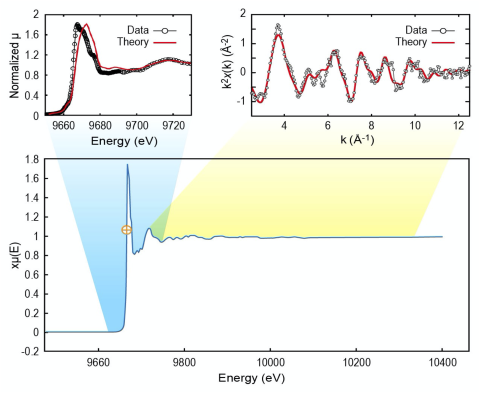
Extended X-ray absorption fine structure (EXAFS) spectroscopy is crucial for determining the coordination environment of impurities and dopants; however, it requires difficult measurements. X-ray absorption near edge structure (XANES) spectroscopy and X-ray emission spectroscopy (XES) can be...
Datasets
0
Citation: Mejia-Rodriguez D, Kim H, Sadler N, Li X, Bohutskyi P, Valiev M, Qian WJ, Cheung MS. PTM-Psi: A python package to facilitate the computational investigation of post-translational modification on protein structures and their impacts on dynamics and functions. Protein Sci. 2023 Dec;32(12)...
Category
Citation : Reichart NJ, Steiger AK, Van Fossen EM, McClure R, Overkleeft HS, Wright AT. Selection and enrichment of microbial species with an increased lignocellulolytic phenotype from a native soil microbiome by activity-based probing. ISME Commun. 2023 Sep 30;3(1):106. doi: 10.1038/s43705-023...
Category
Person
Dr. Bohutskyi’s research focus is in developing new bioprocesses addressing sustainable transformation of carbon dioxide, biomass, and wet or liquid waste, including carbon, nitrogen, phosphorus, and other critical elements into bioproducts, chemicals, and fuels. This research uses a suite of...

Project
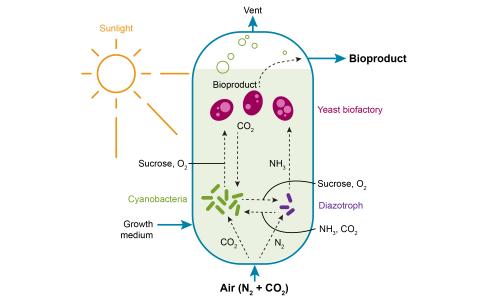
The research goal of this project is to establish model synthetic microbial communities to understand the rules regulating their biological function in order to utilize them as next generation bioproduction platforms capable of reducing carbon and nitrogen footprints in biomanufacturing processes.
Category
Datasets
5
Person
Andrew McNaughton is a computational scientist currently working in the areas of modeling metabolic networks, multi-omics data analysis and integration, and computational chemistry. His areas of interest include high performance computing (HPC), artificial intelligence, and machine learning (ML) to...
Publication
Historically neglected by microbial ecologists, soil viruses are now thought to be critical to global biogeochemical cycles. However, our understanding of their global distribution, activities, and interactions with the soil microbiome remains limited. Here, we present the Global Soil Virus (GSV)...
Soil microorganisms carry out important processes, including support of plant growth and cycling of carbon and other nutrients. However, the majority of soil microbes have not yet been isolated and their functions are largely unknown. Although metagenomic sequencing reveals microbial identities and...
Category
The soil microbiome performs many functions that are key to ecology, agriculture, and nutrient cycling. However, because of the complexity of this ecosystem we do not know the molecular details of the interactions between microbial species that lead to these important functions. Here, we use a...
Category
"Moisture modulates soil reservoirs of active DNA and RNA viruses" Soil is known to harbor viruses, but the majority are uncharacterized and their responses to environmental changes are unknown. Here, we used a multi-omics approach (metagenomics, metatranscriptomics and metaproteomics) to detect...
Institution

Person
Katherine joined the Sprunger Lab at the W. K. Kellogg Biological Station (part of Michigan State University) in January 2023. She came to KBS from Washington State University, where she earned her Ph.D. in soil science in 2022. Her research interests include agroecology with respect to how land...

Person
Emeritus Professor Forage and Extension Agronomist at Washington State University https://css.wsu.edu/profile/?nid=fransen