Two factors that are well-known to influence soil microbiomes are the depth of the soil as well as the level of moisture. Previous works have demonstrated that climate change will increase the incidence of drought in soils, but it is unknown how fluctuations in moisture availability affect soil...
Filter results
Category
- Scientific Discovery (409)
- Biology (288)
- Earth System Science (170)
- Human Health (113)
- Integrative Omics (97)
- Microbiome Science (52)
- National Security (32)
- Computational Research (26)
- Energy Resiliency (22)
- Computing & Analytics (19)
- Renewable Energy (14)
- Chemical & Biological Signatures Science (11)
- Chemistry (11)
- Materials Science (11)
- Weapons of Mass Effect (11)
- Data Analytics & Machine Learning (10)
- Data Analytics & Machine Learning (8)
- Water Power (8)
- Computational Mathematics & Statistics (7)
- Atmospheric Science (6)
- Ecosystem Science (6)
- Visual Analytics (6)
- Coastal Science (4)
- Energy Storage (4)
- Plant Science (4)
- Solar Energy (4)
- Bioenergy Technologies (3)
- Energy Efficiency (3)
- Transportation (3)
- Cybersecurity (2)
- Distribution (2)
- Electric Grid Modernization (2)
- Grid Cybersecurity (2)
- Subsurface Science (2)
- Wind Energy (2)
- Advanced Lighting (1)
- Chemical Physics (1)
- Computational Mathematics & Statistics (1)
- Environmental Management (1)
- Federal Buildings (1)
- Geothermal Energy (1)
- Grid Analytics (1)
- Grid Energy Storage (1)
- High-Performance Computing (1)
- Terrestrial Aquatics (1)
- Vehicle Technologies (1)
- Waste Processing (1)
Tags
- Virology (77)
- Immune Response (51)
- Time Sampled Measurement Datasets (51)
- Differential Expression Analysis (46)
- Gene expression profile data (45)
- Homo sapiens (42)
- Predictive Phenomics (35)
- Multi-Omics (33)
- Mass spectrometry data (32)
- Viruses (28)
- Omics (26)
- Mass Spectrometry (25)
- Soil Microbiology (25)
- Health (23)
- Virus (23)
- MERS-CoV (19)
- Mus musculus (19)
- Proteomics (17)
- sequencing (14)
- Synthetic (14)
- Genomics (13)
- West Nile virus (13)
- High Throughput Sequencing (11)
- Influenza A (11)
- Metagenomics (10)
- PerCon SFA (10)
- Ebola (9)
- Machine Learning (9)
- S. elongatus PCC 7942 (9)
- Microbiome (8)
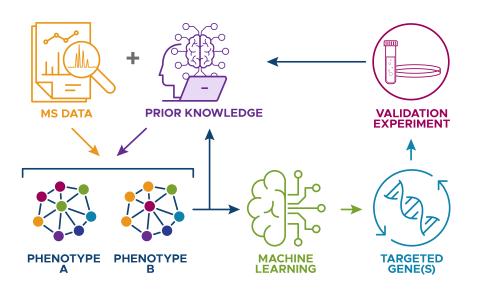
The research goal of this project is to develop a biologically informed machine learning (ML) model that integrates datasets from different studies, and leverages current biological knowledge in an automated manner, to improve predictions in biological data analysis.
Category
Datasets
0
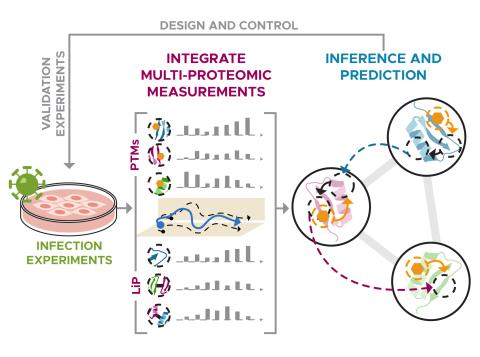
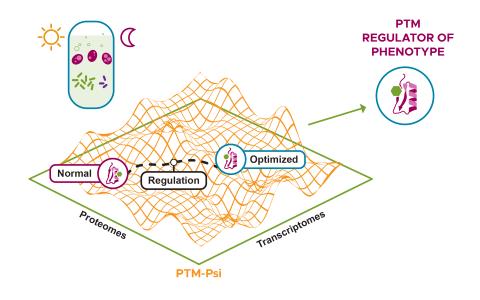
The research goal of this project is to construct and streamline an approach to identify phenotype-relevant signatures by integrating various proteomics data. Leveraging protein structures and interaction networks, we will map structural changes and post-translational modifications to identify...
Category
Datasets
0
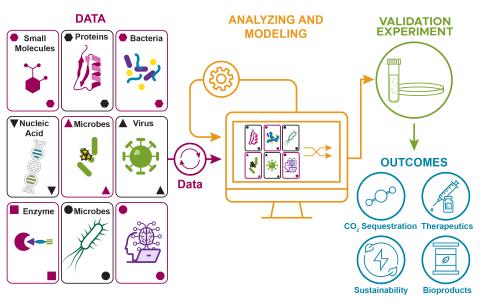
By developing explainable, predictive metabolic models of individual microbes, we aim to design consortia that convert light and abundant atmospheric gases into high-value molecules through microbial division of labor.
Category
Datasets
0
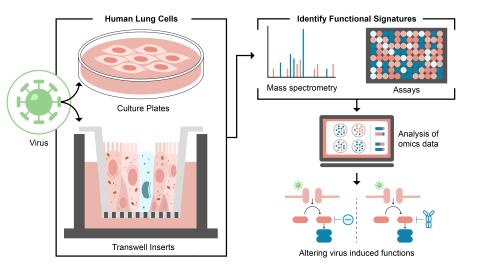
This project will improve current understanding of how viruses manipulate host environments. Use cutting edge, iterative proteomics and metabolomics tools in ex vivo primary human lung cultures that recapitulate the epithelium of the conducting airway and novel high throughput sample capture...
Datasets
7
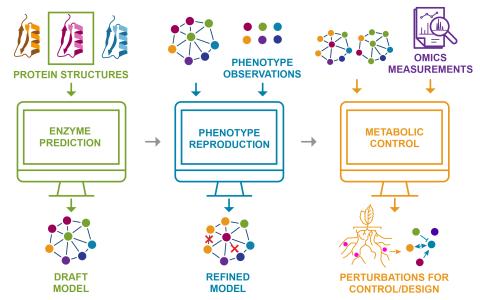
The research goal of this project is to develop computational methods to predict cell regulation phenotypes using small molecule and proteome data to understand outcomes in complex biological systems.
Category
Datasets
0
The research goal of this project is to develop new theory and tools that leverage evolutionary perspectives and knowledge of the energetics of reactions to predict the most likely regulation in a given environment. These methods will accelerate exploration, modeling and understanding of cell...
Category
Datasets
3
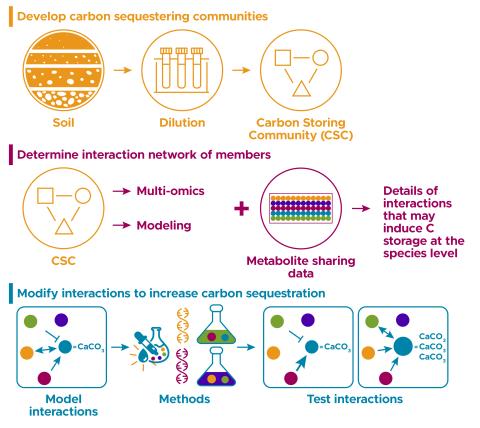
The research goal of this project is to build and understand model communities that show carbon storage phenotypes
Category
Datasets
0
In general, I am interested in studying complex systems by integrating both mechanism-based and data-driven approaches, in order to understand their dynamics, evolution, control, and design. The ultimate goal is to understand (some of) the design principles of complex systems, whether it is physical...
Samantha Powell earned her PhD from the University of Oklahoma in the lab of Dr. George Richter-Addo, using X-ray crystallography to study heme proteins and Clostridium difficile nitroreductases and their interactions with small molecules. From 2019-2020, she was a National Research Council...
Ethan is an applied mathematician with experience in control, optimization, modeling, and machine learning. He is interested in leveraging the tools and successes of data science to push the boundaries of complexity and scale possible within scientific computing. Within modeling, his interests are...
Margaret S. Cheung is a biological physicist and a computational scientist on the Computing, Analytics, and Modeling team at EMSL. She graduated from the National Taiwan University in 1994 and went on to obtain a Ph.D. degree from the University of California at San Diego in 2003. She was then...
Jeremy Zucker is a computational scientist in the department of computational biology at Pacific Northwest National Laboratory. He is a principal investigator for a variety of sponsors, including DARPA, DOE, and internally funded LDRDs. He uses machine learning-powered causal models — abstract and...
Most of Vlad's research is focused on age-related neurodegenerative disorders and fundamentals of aging and the molecular mechanisms underpinning those phenomena. He considers mass spectrometry-based proteomics as a key tool in his research. The richness of the mass spectrometry data and complexity...
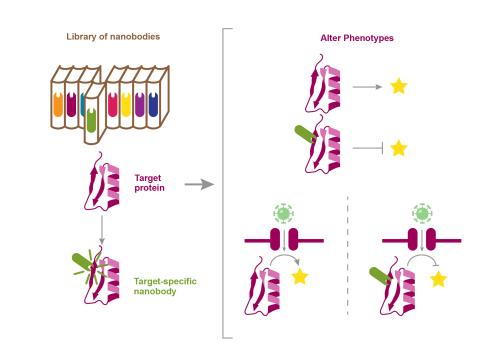
The research goal of this project is to use stimuli-specific, synthetic nanobodies to target functional mediators without prior knowledge of the response networks or manipulating the biological system.
Category
Datasets
0