The science objective of this project is to apply structural proteomics technologies to map the molecular interactome.
Category
Datasets
7
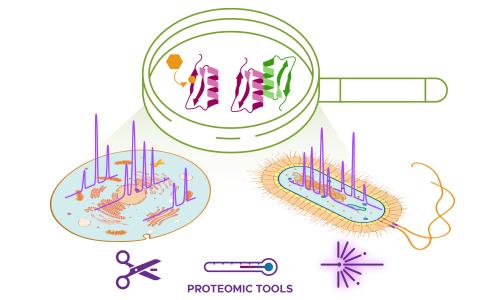
The science objective of this project is to apply structural proteomics technologies to map the molecular interactome.
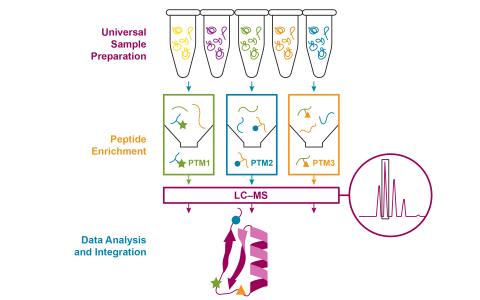
The research objective of this project is to develop an integrative and automated multi-PTM profiling capability with deep proteome coverage.
Nick Reichart earned his PhD in biochemistry from Montana State University where he developed a workflow for bioorthogonal non-canonical amino acid tagging to determine the activity of uncultured microbes in the hot springs of Yellowstone National Park. Afterward, he started as a postdoctoral...

Amy Sims, PhD is a Biomedical Scientist in the Chemical and Biological Signatures Division of the National Security Directorate at the Pacific Northwest National Laboratory (PNNL) in Richland, WA. She earned her Ph.D. from Vanderbilt University Medical Center and worked with Ralph Baric, PhD at the...

John is an accomplished lipid biochemist and structural biologist with an interest in understanding molecular pathology of disease. He earned his Ph.D. from Wake Forest School of Medicine where he received training in lipid biochemistry under the late Dr. Lawrence Rudel studying the role of low...

Dr. Tong Zhang is a scientist in the Biological Sciences Division at the Pacific Northwest National Laboratory (PNNL). His research focuses on using mass spectrometry-based proteomics to understand fundamental biology and improve human health. His current projects include developing redox proteomics...

The Human Islet Research Network (HIRN) is a large consortia with many research projects focused on understanding how beta cells are lost in type 1 diabetics (T1D) with a goal of finding how to protect against or replace the loss of functional beta cells. The consortia has multiple branches of...
Dr. Bramer is the team lead for Data Science and Biostatistics in the Computational Biology Group at PNNL. Her current research is focused on applying and developing statistical and machine learning methods for biological data, particularly mass spectrometry omics data, and developing software tools...

Predictive Phenomics Initiative (PPI) Project Data Catalog Collection The Predictive Phenomics Initiative (PPI) is an internal LDRD investment at Pacific Northwest National Laboratory focused on unraveling the mysteries of molecular function in complex biological systems. Explore PPI research...
The science objectives of this project are to: Functionally enrich microbial communities and generate multi-omics to correlate biochemical mechanisms to activity. Integrate PhenoProfiling with Thrust Areas 2 and 3 to develop models for phenotype prediction and interspecies interactions. Evaluate...
