Description
Dataset Description
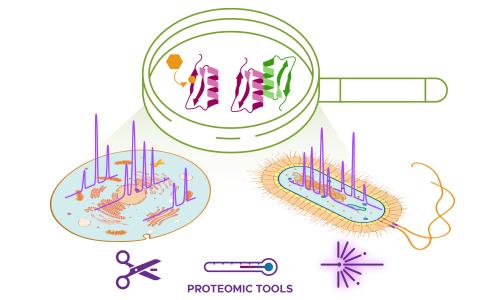
The purpose of this experiment was to evaluate the human host cellular response to wild type human coronavirus strain 229E (HCoV-229E) infection. Sample data was obtained for mock-infected and immortalized human lung fibroblasts (MRC-5) (MOI 5). Whole cell lysates were collected at 8, 16, and 24 hours post infection and were processed for proteomic analysis (abundance-based proteomics, limited proteolysis (LiP) structural proteomic analysis, and proteome integral solubility alteration (PISA) structural proteomic analysis. LFQ and TMT18 "whole cell" data packaging activities for LiP assays involving mock and infected experiments using MRC5 cells.
Data Download Reference Citation:
Sims, Amy C; Zhang, Tong; Melchior, J; & Waters, Katrina M (2025). Human Host Cellular Response to HCoV-229E Infection Proteomics, Whole Cell Lysate (ACS-JM-DP5)
Accessible Digital Data Downloads
The repository contains the following folders and files:
- ACS-JM-DP5_SampleMetadata.xlsx: Contains sample metadata information including descriptors, experimental conditions, cell lines (if applicable)
- ACS-JM-DP5_PISA.xlsx: Contains normalized abundance PISA data for the MRC5 cell line
- ACS-JM-DP5_LiP.xlsx: Contains normalized abundance LiP data and statistics for the MRC5 cell line
Total Download Size: 25.3 MB, zipped
Linked Primary Data
Primary mass spectrometry data can be found in MassIVE. The PISA data is located here: MSV000099899. LiP is available here: MSV000099901.
The research data described here was funded in whole or in part by the Predictive Phenomics Initiative (PPI) at Pacific Northwest National Laboratory (PNNL). This work was conducted under the Laboratory Directed Research and Development Program at PNNL. PNNL is a multiprogram national laboratory operated by Battelle for the DOE under Contract No. DE-AC05-76RL01830.
Citation Policy
In efforts to enable discovery, reproducibility, and reuse of PPI-funded project dataset citations in accordance with best practices (as outlined by the FORCE11 Data Citation Principles), we ask that all reuse of project data and metadata download materials acknowledge all primary and secondary dataset citations and corresponding journal articles where applicable.
Data Licensing
Projects (3)
People (3)