Showing 106 - 120 of 120
The Biomedical Resilience & Readiness in Adverse Operating Environments (BRAVE) Project develop new capabilities to improve health and performance of first responders in adverse operating environments common to national defense. The BRAVE project analyze biological samples, collect physiological...
  1. Datasets

    1

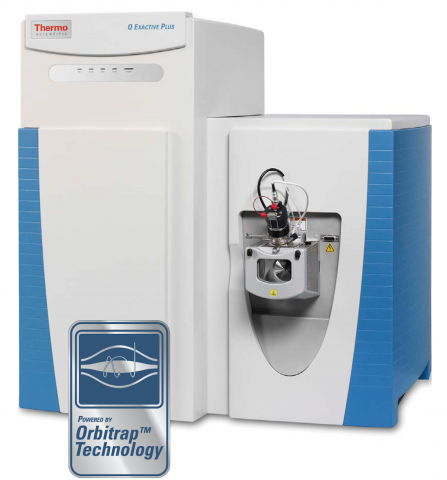
Last updated on 2025-02-03T23:25:06+00:00 by LN Anderson The Thermo Scientific™ Q Exactive™ Plus Mass Spectrometer benchtop LC-MS/MS system combines quadruple precursor ion selection with high-resolution, accurate-mass (HRAM) Orbitrap detection to deliver exceptional performance and versatility...

Last updated on 2024-02-11T22:41:43+00:00 by LN Anderson Omics-LHV Profiling of Host Response to Influenza A Virus Infection Background Influenza A virus ( IAV ) is a high risk biological agent belonging to the Orthomyxoviridae family is classified as a Category C priority pathogen by the National...

  1. Datasets

    8

Dr. Gao obtained her Ph.D degree in Chemistry from institute of chemistry, Chinese Academy of Science. His Ph.D research focused on multiscale modeling of morphology and properties of polymeric materials, polymer processing and unveiling the process–properties relationships. (atomic to coarse...

Sara Gosline received BA in Computer Science from Columbia University and spent two years working in software before returning to graduate school full time. She received her Masters and PhD in Computer Science from McGill University with a specialty in Bioinformatics and then moved to the...

Last updated on 2024-02-11T22:41:43+00:00 by LN Anderson PNNL DataHub NIAID Program Project: Modeling Host Responses to Understand Severe Human Virus Infections, Multi-Omic Viral Dataset Catalog Collection Background The National Institute of Allergy and Infectious Diseases (NIAID) "Modeling Host...

  1. Datasets

    45
Software
EyeSea software is available at https://github.com/pnnl/EyeSea
Clean energy from oceans and rivers is becoming a reality with the development of new technologies like tidal and instream turbines that generate electricity from naturally flowing water. These new technologies are being monitored for effects on fish and other wildlife using underwater video...

Last updated on 2024-02-11T22:41:43+00:00 by LN Anderson Omics-LHV Profiling of Host Response to West Nile Virus Infection Background West Nile virus ( WNV ) belongs to the mosquito-borne Flaviviridae family and is classified as a Category A priority pathogen by the National Institute of Allergy and...

  1. Datasets

    11

Last updated on 2024-02-11T22:41:43+00:00 by LN Anderson Omics-LHV Profiling of Host Response to Ebola Virus Infection Background Ebola virus ( EBOV ) is a high risk biological agent, belonging to the Flaviviridae family, and is classified as a Category A priority pathogen by the National Institute...

  1. Datasets

    6

Last updated on 2024-02-11T22:41:43+00:00 by LN Anderson Omics-LHV Profiling of Host Response to MERS-CoV Virus Infection Background Middle East Respiratory Syndrome coronavirus ( MERS-CoV ), part of the Coronaviridae family, is classified as a Category C priority pathogen by the National Institute...

  1. Datasets

    15

Last updated on 2024-02-11T22:41:43+00:00 by LN Anderson Omics-LHV Profiling of Host Interferon-Stimulated Response to Virus Infection Background The human host Interferon ( IFN ) alpha, beta, and gamma participate in the body's natural immune response to lethal virus infection and disease. The...

  1. Datasets

    5
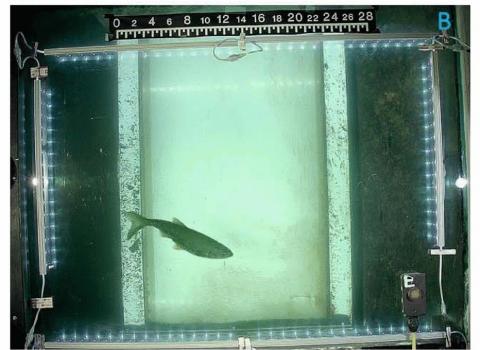
The EyeSea underwater video dataset was assembled for developing algorithms for detecting fish in real world underwater video data. The data were recorded as part of environmental monitoring efforts at three different water power sites.
  1. Datasets

    1

This project is an interdisciplinary collaboration supported by US DOE Office of Science's Scientific Discovery through Advanced Computing (SciDAC) program. The project addresses a crucial but largely overlooked source of error in the Energy Exascale Earth System Model (E3SM) and other atmosphere...

  1. Datasets

    2

Recent studies have shown that reducing the precision of floating‐point calculations in an atmospheric model can improve the model's computational performance without affecting model fidelity, but code changes are needed to accommodate lower precision or to prevent undue round‐off error. For complex...