
"Moisture modulates soil reservoirs of active DNA and RNA viruses" Soil is known to harbor viruses, but the majority are uncharacterized and their responses to environmental changes are unknown. Here, we used a multi-omics approach (metagenomics, metatranscriptomics and metaproteomics) to detect...
Showing 961 - 975 of 21129
The soil microbiome performs many functions that are key to ecology, agriculture, and nutrient cycling. However, because of the complexity of this ecosystem we do not know the molecular details of the interactions between microbial species that lead to these important functions. Here, we use a...
Category
Institution

Person
Emeritus Professor Forage and Extension Agronomist at Washington State University https://css.wsu.edu/profile/?nid=fransen

Person
Katherine joined the Sprunger Lab at the W. K. Kellogg Biological Station (part of Michigan State University) in January 2023. She came to KBS from Washington State University, where she earned her Ph.D. in soil science in 2022. Her research interests include agroecology with respect to how land...

Publication
Two factors that are well-known to influence soil microbiomes are the depth of the soil as well as the level of moisture. Previous works have demonstrated that climate change will increase the incidence of drought in soils, but it is unknown how fluctuations in moisture availability affect soil...
Category
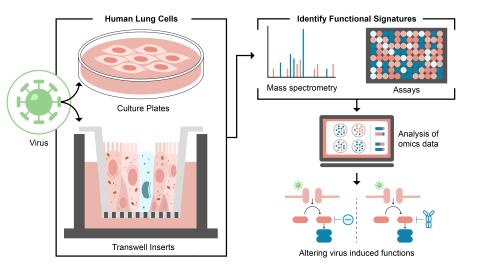
This project will improve current understanding of how viruses manipulate host environments. Use cutting edge, iterative proteomics and metabolomics tools in ex vivo primary human lung cultures that recapitulate the epithelium of the conducting airway and novel high throughput sample capture...
Datasets
5
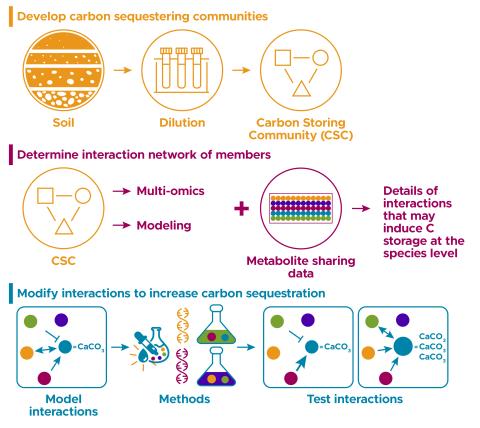
The research goal of this project is to build and understand model communities that show carbon storage phenotypes
Category
Datasets
0
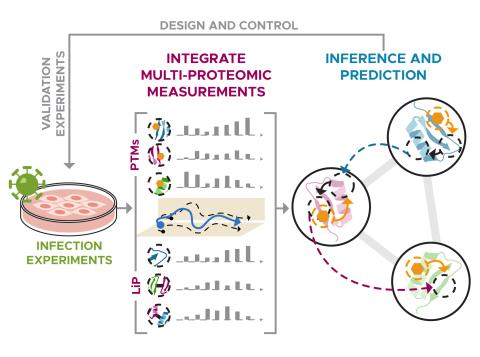
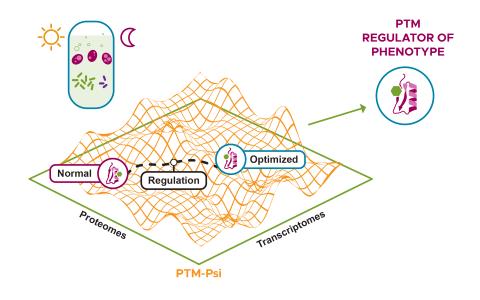
The research goal of this project is to construct and streamline an approach to identify phenotype-relevant signatures by integrating various proteomics data. Leveraging protein structures and interaction networks, we will map structural changes and post-translational modifications to identify...
Category
Datasets
0
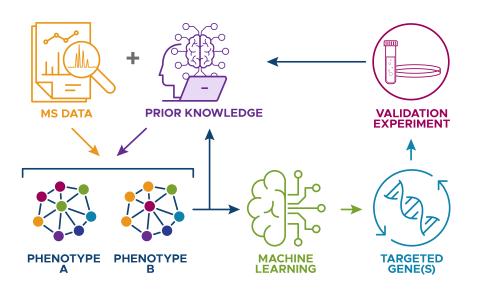
The research goal of this project is to develop a biologically informed machine learning (ML) model that integrates datasets from different studies, and leverages current biological knowledge in an automated manner, to improve predictions in biological data analysis.
Category
Datasets
0
The research goal of this project is to develop computational methods to predict cell regulation phenotypes using small molecule and proteome data to understand outcomes in complex biological systems.
Category
Datasets
0
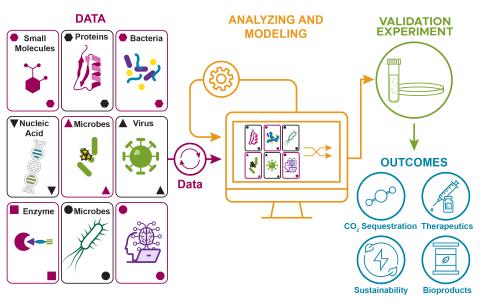
By developing explainable, predictive metabolic models of individual microbes, we aim to design consortia that convert light and abundant atmospheric gases into high-value molecules through microbial division of labor.
Category
Datasets
0
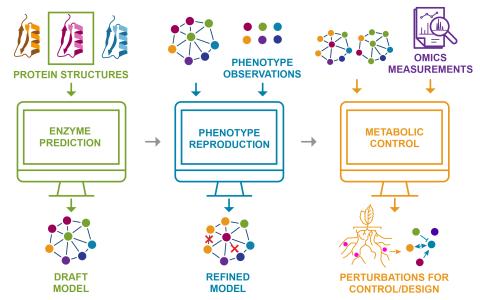
The research goal of this project is to develop new theory and tools that leverage evolutionary perspectives and knowledge of the energetics of reactions to predict the most likely regulation in a given environment. These methods will accelerate exploration, modeling and understanding of cell...
Category
Datasets
3
Person
Samantha Powell earned her PhD from the University of Oklahoma in the lab of Dr. George Richter-Addo, using X-ray crystallography to study heme proteins and Clostridium difficile nitroreductases and their interactions with small molecules. From 2019-2020, she was a National Research Council...

Person
Margaret S. Cheung is a biological physicist and a computational scientist on the Computing, Analytics, and Modeling team at EMSL. She graduated from the National Taiwan University in 1994 and went on to obtain a Ph.D. degree from the University of California at San Diego in 2003. She was then...