Showing 1 - 10 of 10

Created 2024-12-20T23:47:47+00:00 by LN Anderson ; Last updated 2025-05-09T15:55:34+00:00 S. elongatus PCC 7942 Circadian Control Bioproduction Metabolomics (PB-DP5) The purpose of this experiment was to evaluate how circadian clock regulation impacts carbon partitioning between storage, growth, and...

Created 2024-12-20T23:47:47+00:00 by LN Anderson ; Last updated 2025-05-09T15:55:34+00:00 S. elongatus PCC 7942 Circadian Control Bioproduction Transcriptomics (PB-DP3) The purpose of this experiment was to evaluate how circadian clock regulation impacts carbon partitioning between storage, growth...

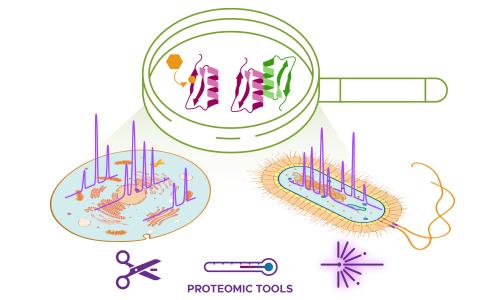
Created on 2024-10-16T17:27:40+00:00 by LN Anderson ; Last updated 2025-08-01T15:13:46+00:00. S. elongatus PCC 7942 LiP and TPP Structural Proteomics (JM-PB-DP3) The purpose of this experiment was to investigate structural alterations in proteins involved in central carbon metabolism and...

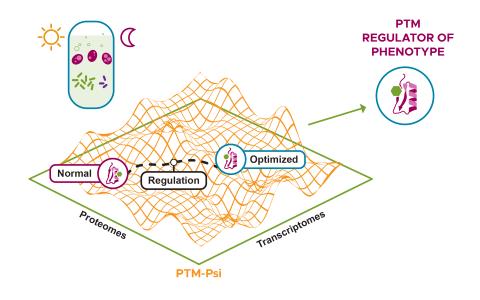
Dataset Description The purpose of this experiment was to examine the redox proteome of S. elongatus PCC 7942 CscB/SPS under different light conditions (light and dark) and culture conditions (dense and dilute optical density). Samples were processed using a resin-assisted capture (RAC) workflow...

Data Description Co-cultured S. elongatus PCC 7942 CscB/SPS and R. toruloides IFO0880 presented as an effective photosynthesis-driven biofuel production platform. The goal of this experiment was to understand the molecular mechanism of this co-culture system at redox post-translational modification...

This study investigates how circadian clock regulation impacts carbon partitioning between storage, growth, and product synthesis in Synechococcus elongatus PCC 7942 in providing insights for potential strategies for enhanced bioproduction. In our analysis we explore circadian regulatory rewiring of...

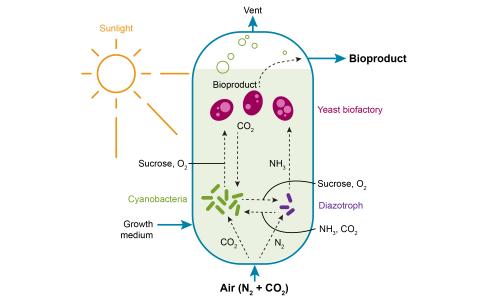
The research goal of this project is to establish model synthetic microbial communities to understand the rules regulating their biological function in order to utilize them as next generation bioproduction platforms capable of reducing carbon and nitrogen footprints in biomanufacturing processes.

  1. Datasets

    4