Journal Article
mBio, vol. 13, iss. 3, 2022
Authors
Sarah C. Feid, Hanna E. Walukiewicz, Xiaoyi Wang, Ernesto S. Nakayasu, Christopher V. Rao, Alan J. Wolfe, Vaughn S. Cooper

The Sequel II System Sequencer is a high-throughput DNA sequencer machine developed and manufactured by PacBio , and is designed for high throughput, production-scale sequencing laboratories. Originally released in 2015, the Sequel system provides Single Molecule, Real-Time (SMRT) sequencing core...

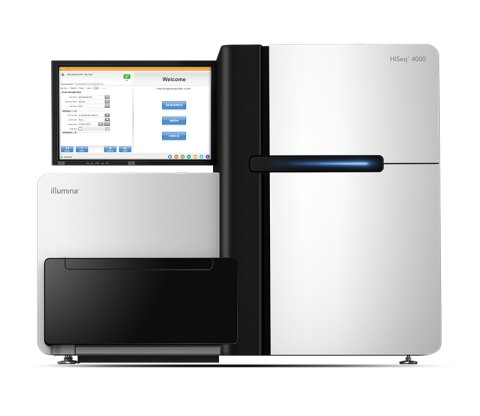
The Illumina HiSeq 4000 System Sequencer is a high-throughput DNA sequencer machine developed and manufactured by Illumina , and is designed for high throughput, production-scale sequencing laboratories. Built off the HiSeq 2500 System and harnessing the patterned flow cell technology originally...
Predicting accurate nuclear magnetic resonance chemical shieldings relies upon cancellation of different types of errors between the theoretically calculated shielding constant of the analyte of interest and the reference. Often, the intrinsic error in computed shieldings due to basis sets...
Crystallization of Al3+-bearing solid phases from highly alkaline Na2O:Al2O3:H2O solutions commonly necessitates an Al3+ coordination change from tetrahedral to octahedral, but intermediate coordination states are often difficult to isolate. Here, a similar Al3+ coordination change process is...
The quantum mechanical treatment of both electrons and nuclei is crucial in nonadiabatic dynamical processes such as proton-coupled electron transfer. The nuclear−electronic orbital (NEO) method provides an elegant framework for including nuclear quantum effects beyond the Born–Oppenheimer...
The stability of aluminum oxyhydroxide (AlOOH, boehmite) to radiolysis and dehydration to alumina (γ-Al2O3) under vacuum was investigated using TGA followed by detailed, structural analysis with Raman, powder X-Ray Diffraction (pXRD), high energy X-Ray Diffraction (heXRD), 27Al Magic Angle Spinning...
Understanding mechanistic pathways to radiolytic hydrogen generation by metal oxyhydroxide nanomaterials is challenging because of the difficulties of distinguishing key locations of OH bond scission, from structural interiors to hydroxylated surfaces to physi-sorbed water molecules. Here we...
Tetrahedrally coordinated aluminate Al(OH)4- and dialuminate Al2O(OH)62- anions are considered to be major species in aluminum-rich alkaline solutions. However, their relative abundance remains difficult to spectroscopically quantify due local structure similarities and poorly understood effects...
The incorporation of relatively minor impurity metals onto metal (oxy)hydroxides can strongly impact solubility. In complex highly alkaline multicomponent radioactive tank wastes such as those at the Hanford Nuclear Reservation, tests indicate that the surface area-normalized dissolution rate of...